What pattern is strongest between your two charts?
See whether your connection is led by chemistry, emotional safety, long-term potential, recognition, intensity, or growth — and the exact synastry signals behind it.
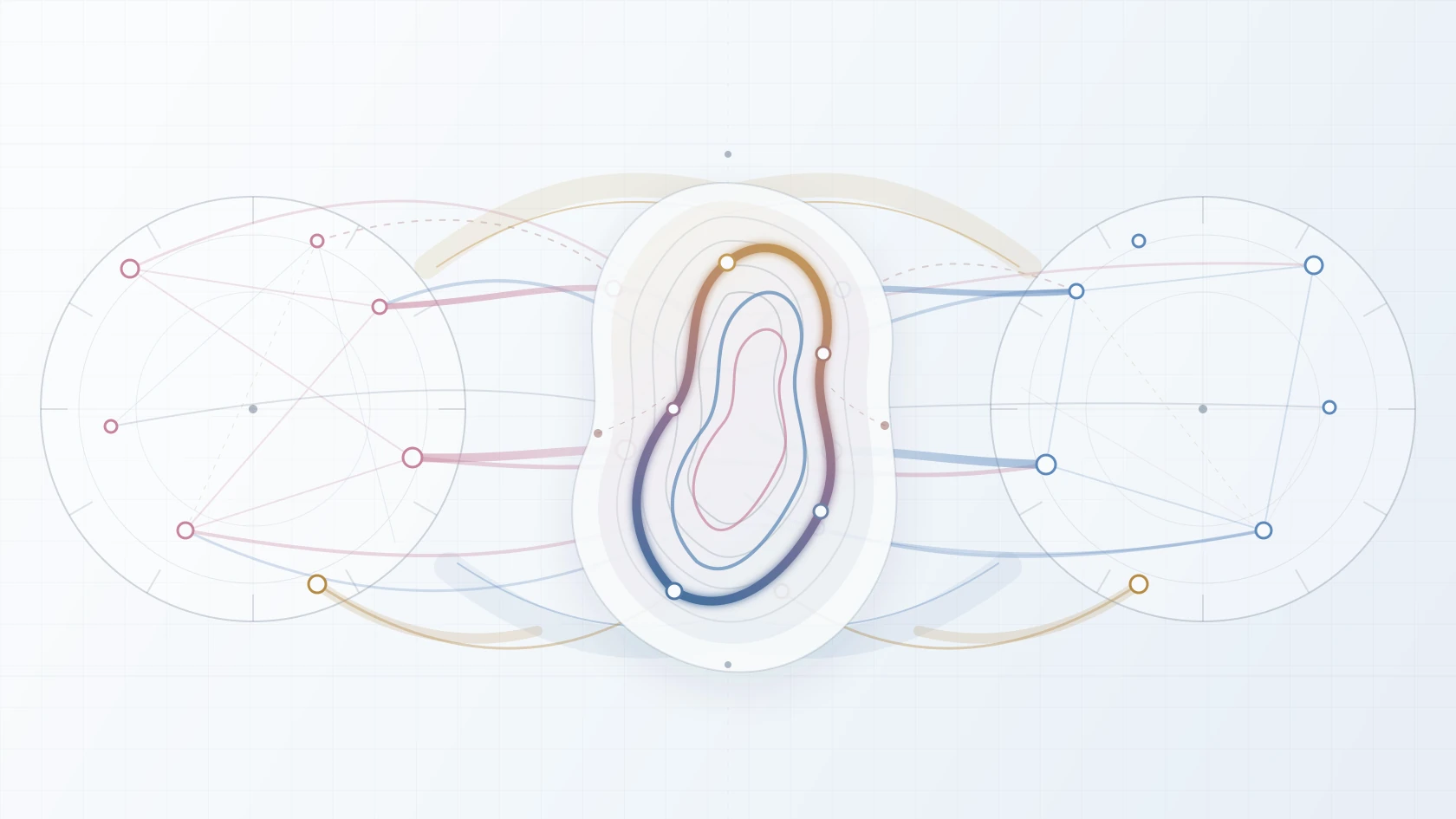
Deep Recognition
The bond registers quickly as meaningful or familiar, with repeated chart contacts supporting that feeling.
Compare your two birth charts
Add names to make the result easier to read and share. Exact birth times also unlock precise house overlays and each person's eighth-house ruler contacts.
Choose a city from the suggestions for coordinates.
Choose a city from the suggestions for coordinates.
Birth details are used only to calculate this result
One clear headline, with the full relationship still visible.
Your result starts with the dominant pattern, then shows the strongest dimensions and the exact chart evidence behind them.
What leads the bond?
Find the one relationship theme that repeats more strongly than the others.
What supports it?
See the aspects, house overlays, and eighth-house ruler contacts that support the result.
What else is present?
Compare the full balance without reducing the relationship to one compatibility score.
Editorial reads that sharpen what the signature is really saying.
These are the best supporting reads if users need more context around inter-chart aspects, house overlays, structure, or why one chart pattern ranks higher than another.
Browse all readings
Moon-Venus In Synastry
A better pre-read if users need a steadier model for warmth, comfort, and emotional reciprocity.

North Node Conjunct Venus
Useful context for reading repeated Venus, Node, and house overlay signals without high-drama framing.


Saturn In Synastry: Commitment Vs Weight
Important for reading long-term potential, structure, and the difference between steadiness and emotional heaviness.

Why Some People Feel Like Home Immediately
A strong counterweight when the chart has recognition and comfort signals that need more context than one score.
A Relationship Signature Is Not The Same As A Simple Compatibility Score
A compatibility score can flatten two charts into one number. A relationship signature is more useful when it shows which repeated signal leads the comparison. The same pair can show ease, pressure, attraction indicators, and long-term structure at once, but usually one pattern is more repeated than the others.
Why Repetition Matters More Than One Dramatic Aspect
A single intense contact can be meaningful, but it should not control the whole reading by itself. This tool looks for repeated signals across aspects, overlays, Nodes, Saturn, Juno, and attraction indicators. When both birth times are known, it also uses the traditional rulers of each person's eighth house as a small context layer without counting the same aspect twice. When several chart factors point to the same theme, the relationship signature becomes clearer and less dependent on one dramatic contact.
How To Use This Result Beside Synastry
Use the relationship signature as the headline, then open the full synastry chart for the detailed evidence. The signature tells you which repeated pattern leads the comparison. The synastry result explains the exact contacts behind that headline.
Want this comparison in a private format the other person completes with you? Compare two birth charts with Chemistry Deck →