Track the lunar cycle
View the exact new moons and full moons of a month with sign, degree, and local time.
Times are shown in your current local timezone offset.
Open the guide for the monthly lunar rhythm, then view exact dates.
Read the Moon with more context.
Use these guides to understand the phase, the days after the peak, and when a lunar event becomes personal.
Browse all readings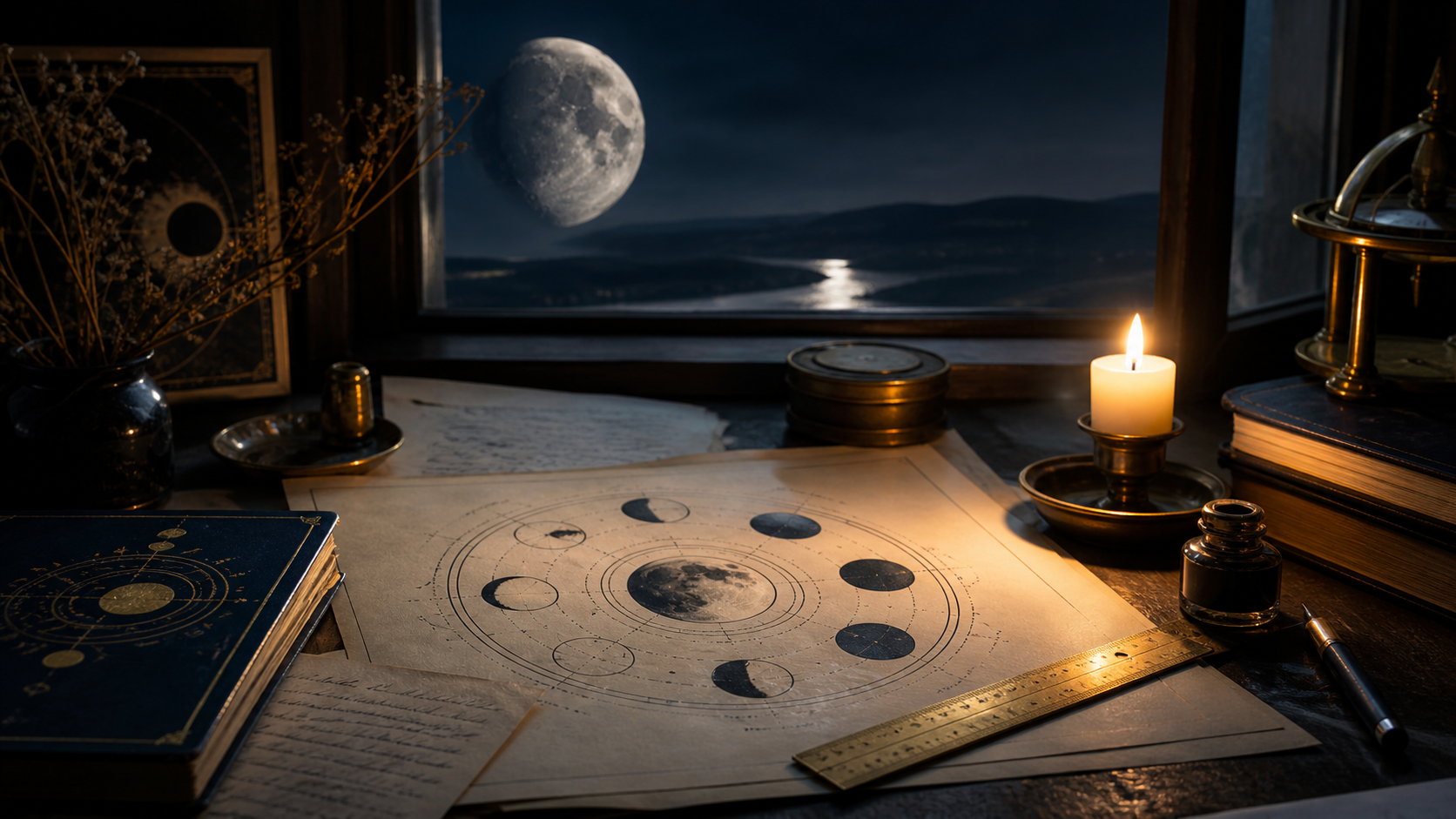
Waning Gibbous Moon Meaning
A grounded follow-up for the days after a Full Moon, when the meaning often becomes easier to sort.
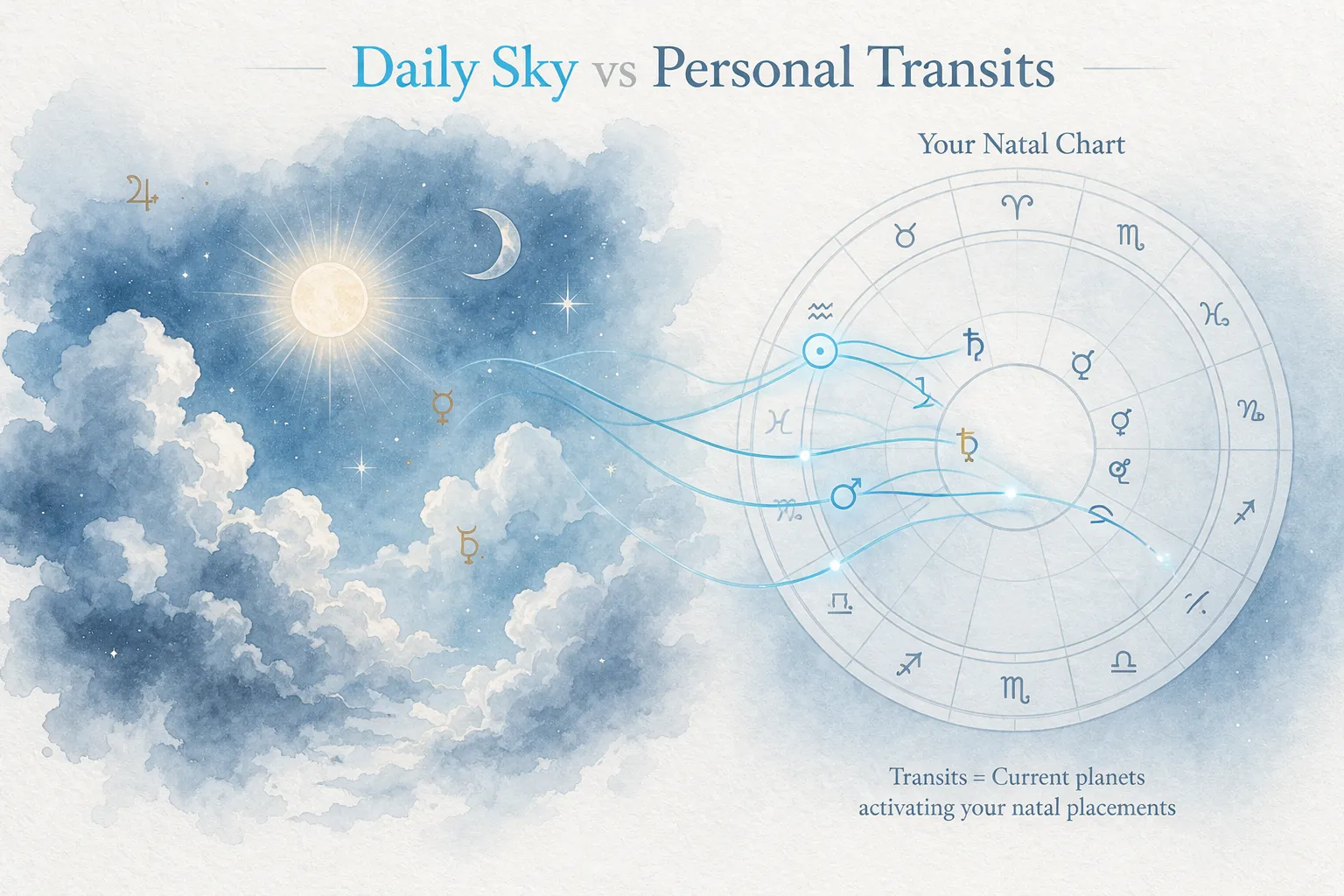
Daily Sky Vs Personal Transits
Use this when you want to separate the general lunar mood from timing that is personal to your chart.
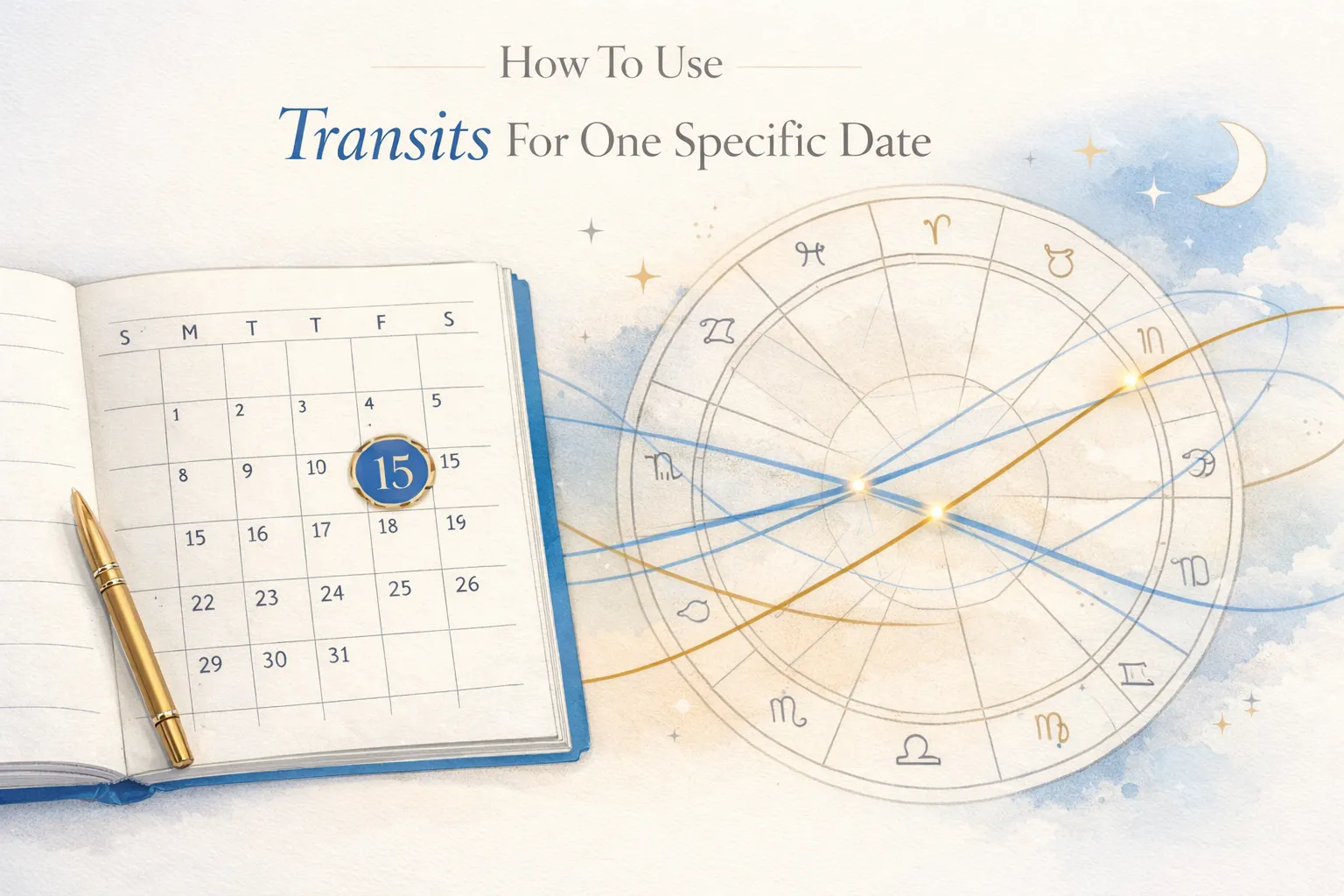
How To Use Transits For One Date
A useful next step when a new moon or full moon lands on a day you want to understand more clearly.
How to use a moon phase calendar without overcomplicating it
Start with the phase, then add the sign. A New Moon tells you the cycle is opening, while a Full Moon shows the part of the month that is reaching visibility. The sign adds tone: fire signs move faster, earth signs ask for practical grounding, air signs bring conversation and perspective, and water signs tend to emphasize feeling and memory.
New Moon and Full Moon dates are timing anchors
The exact date is useful because it gives the lunar cycle a clear peak or reset point. You do not need to make every lunation dramatic. A simple calendar helps you see when the month is building, when it is peaking, and when it is moving into integration or release.
For personal meaning, connect the Moon to your chart
A moon phase becomes more personal when it lands near your natal Sun, Moon, Ascendant, chart ruler, or another important placement. If you want that extra layer, use the Moon Phase Calendar as the monthly overview, then check your Birth Chart or Transits for the exact natal contacts.