What Is Chiron In Astrology? How To Read The Wounded Healer In Your Birth Chart
A grounded guide to Chiron in astrology, including what the wounded healer means, how to read Chiron by sign, house, and aspects, and why this placement can feel so personal.
Chiron is not a planet, but it can feel very personal
Chiron is one of those placements people often discover after they already know their Sun, Moon, rising, Venus, and Mars. At first it can look like a small detail. It is not one of the classical planets, and it does not usually dominate a beginner birth chart reading. But when Chiron is described well, many people recognize it immediately.
In astrology, Chiron is usually called the wounded healer. That phrase can sound dramatic, so it helps to slow it down. Chiron does not mean something is broken beyond repair. It points to a tender area of the chart: a place where someone may feel exposed, different, not fully fluent, or unusually sensitive. Over time, that same sensitivity can become a source of understanding, compassion, skill, and perspective.
Why astrologers call Chiron the wounded healer
The name comes from mythology. Chiron was a wise centaur associated with teaching, medicine, music, mentorship, and healing. Unlike the rougher centaur image, Chiron was known for knowledge and guidance. The paradox is that he carried a wound of his own. That is the image astrology borrows: a place where pain and wisdom sit close together.
This does not mean every Chiron placement describes a literal event. A good Chiron reading should avoid turning the chart into a list of injuries. Instead, it asks a more careful question: where does life make you unusually aware of vulnerability, and where might that awareness eventually become something you understand deeply enough to help yourself and others?
Chiron sits between Saturn and Uranus, and that matters symbolically
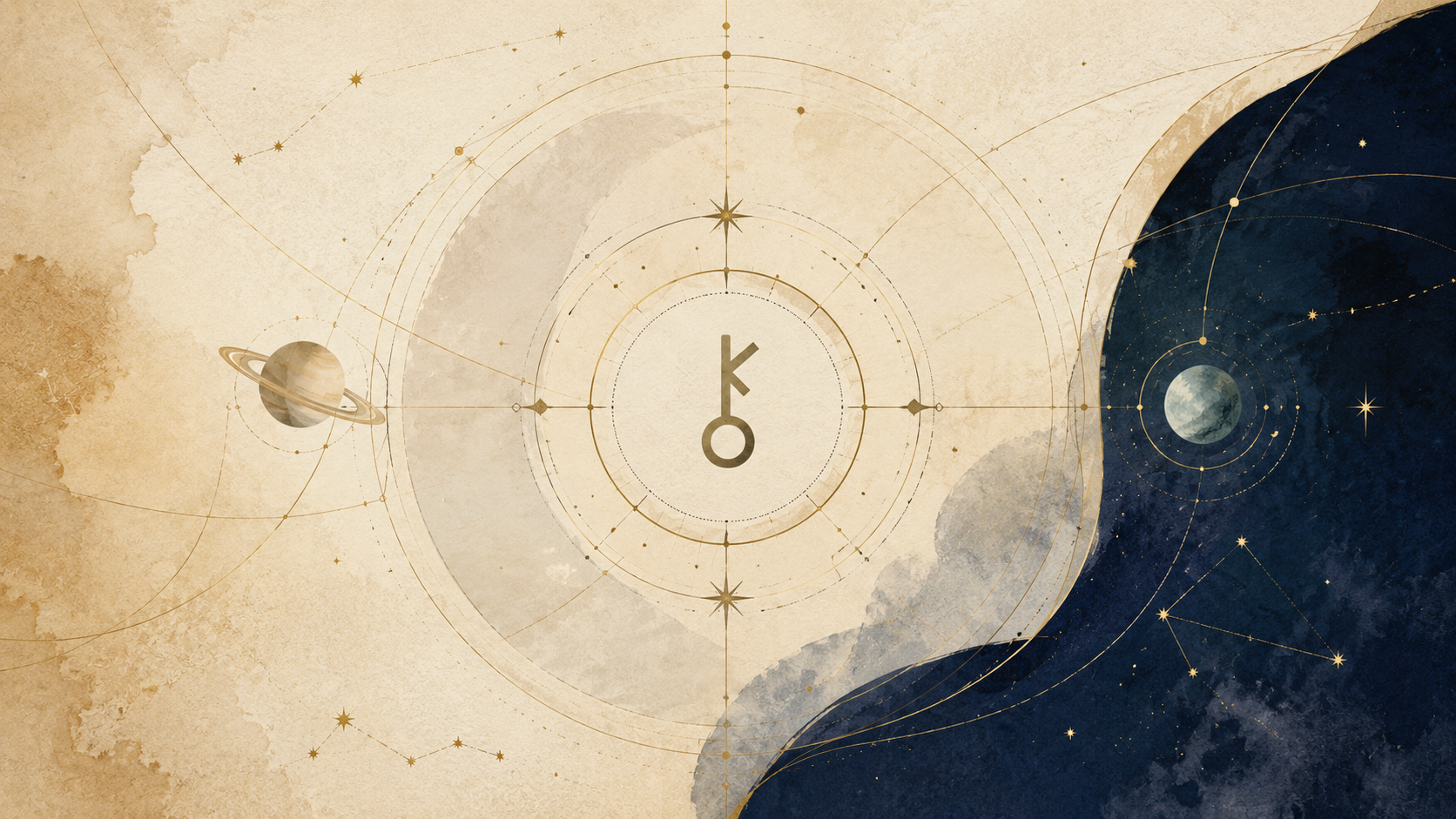
Astronomically, Chiron was discovered in 1977 and is often described as a centaur object or comet-asteroid hybrid. Its orbit lives in the region between Saturn and Uranus, which gives astrologers a useful symbolic bridge. Saturn is structure, limits, time, responsibility, and the reality principle. Uranus is rupture, awakening, freedom, difference, and change.
Chiron can feel like the place where those two worlds meet. It may show a limit or ache that cannot be fixed by pretending it is not there. But it can also show a strange opening, a point of difference that eventually changes how a person understands themselves. Chiron is rarely comfortable in a simple way. It asks for honesty before it becomes useful.
How to find Chiron in your birth chart
To read Chiron, you need three pieces of information: the sign, the house, and the aspects. The sign shows the style of sensitivity. The house shows the area of life where it becomes most visible. The aspects show which other parts of the chart are connected to the Chiron story.
If you only read the sign, the interpretation can become too generic. Many people born around the same period share the same Chiron sign because Chiron moves slowly. The house and aspects make it personal. Chiron in Aries in the tenth house does not speak the same way as Chiron in Aries in the fourth house. One may touch visibility, ambition, and public confidence. The other may speak through family atmosphere, belonging, and private identity.
- Chiron sign: the style of the sensitivity.
- Chiron house: the life area where it tends to show up.
- Chiron aspects: the planets and points that intensify, soften, or complicate the pattern.
The Chiron sign describes the language of the wound
The sign of Chiron describes the kind of experience that may feel tender. Chiron in Aries can be sensitive around self-assertion, independence, or the right to take up space. Chiron in Taurus may touch worth, stability, the body, or material security. Chiron in Gemini can speak through voice, learning, being understood, or feeling mentally confident. Chiron in Cancer may show tenderness around belonging, care, family, or emotional safety.
The rest of the zodiac continues the pattern in different language. Leo can involve visibility and creative self-expression. Virgo can involve competence, usefulness, and imperfection. Libra can involve partnership and being chosen. Scorpio can involve trust, control, intimacy, and emotional exposure. Sagittarius can involve belief, truth, and meaning. Capricorn can involve achievement, authority, and being taken seriously. Aquarius can involve belonging, difference, and social distance. Pisces can involve boundaries, faith, grief, and sensitivity to what is unseen.
The Chiron house shows where the story becomes lived
The house is where Chiron stops being an abstract symbol and becomes a life area. Chiron in the first house may be tied to identity, presence, and the feeling of being seen. In the second house, it can connect to self-worth, money, voice, and the body. In the third, it may speak through communication, siblings, learning, or early environments. In the fourth, it often becomes private: home, family, roots, and emotional ground.
Chiron in the fifth house can touch creativity, romance, play, and being fully expressive. In the sixth, it may show up through work rhythms, health routines, usefulness, and perfectionism. In the seventh, it often appears through partnership mirrors. In the eighth, it can involve trust, sharing, loss, intensity, and psychological depth. In the ninth, it may relate to faith, worldview, education, and long-distance perspective. In the tenth, visibility and vocation are emphasized. In the eleventh, belonging and community matter. In the twelfth, the pattern may feel hidden, spiritual, ancestral, or difficult to name.
Aspects to Chiron show how loud it is in the chart
Not every Chiron placement is equally loud. A person may have Chiron by sign and house, but if it makes few major aspects, it may operate quietly. If Chiron closely aspects the Sun, Moon, Ascendant, Venus, Mars, Saturn, or the chart ruler, it usually becomes more central. It may be woven into identity, emotion, attraction, action, boundaries, or the basic way someone navigates life.
A Chiron-Moon aspect can make emotional safety feel closely tied to old tenderness. Chiron-Sun can touch confidence and self-recognition. Chiron-Venus may connect love, beauty, desirability, and self-worth. Chiron-Mars can involve assertion, anger, courage, or the right to act. Chiron-Saturn may feel heavy or serious, but it can also create maturity. Chiron-Uranus can make difference impossible to ignore. The orb matters: the closer the aspect, the more noticeable it tends to be.
Chiron is not a diagnosis
This is important. Chiron is an astrological symbol, not a medical, psychological, or therapeutic diagnosis. It should not be used to tell someone what happened to them, label their pain, or replace real support. A responsible Chiron reading stays symbolic and reflective. It opens language, but it does not claim authority over someone else's lived experience.
That is also what makes Chiron useful when handled carefully. It can give a person permission to notice a recurring sensitivity without reducing them to it. Instead of saying this is your wound and you are doomed to repeat it, a better reading says: this is a place where you may have learned to protect yourself, and it may also be a place where your awareness becomes unusually refined.
Chiron can show where you understand others faster than you understand yourself
One of the clearest Chiron patterns is the ability to see something in others that remains harder to apply inwardly. A person with a strong Chiron placement may be very good at naming someone else's fear, encouraging someone else's growth, or making space for someone else's vulnerability. But when the same topic belongs to them, the wisdom can become harder to access.
That is the wounded healer paradox in ordinary language. It is not about being perfectly healed before helping anyone. It is about developing insight through a place that has required patience. Sometimes Chiron shows the topic you keep learning through. Sometimes it shows the advice you give beautifully but struggle to receive. Sometimes it shows where compassion becomes more honest because it was not learned from theory alone.
How Chiron transits feel
Chiron transits tend to activate the natal Chiron story or a sensitive planet in the chart. They are not always dramatic in an outward way. Sometimes they arrive as a realization, a memory, a conversation, a repeated pattern, or a moment where an old self-protection strategy no longer works as neatly as it used to. Chiron transits often ask for a different relationship with vulnerability.
The Chiron return, which happens around age fifty, is especially known because Chiron takes roughly fifty years to move through the zodiac. This period can bring a review of the themes Chiron has carried across life. It does not have to be a crisis. It can be a time of integration, where a person sees how much wisdom has formed around something that once felt only difficult.
The best way to read Chiron without overdoing it
Start simple. Look at the sign, house, and tight aspects. Ask where this placement describes sensitivity, not failure. Then ask what kind of awareness has grown from that sensitivity. If the answer feels too dramatic, soften it. If the answer feels too vague, bring in the house and aspects. Chiron needs precision, but it also needs care.
A strong Chiron reading should not make the chart feel heavier. It should make a pattern easier to hold. Chiron is not the only story in the birth chart, and it is rarely the whole identity. But it can describe a place where tenderness, skill, humility, and wisdom become strangely intertwined. Read it gently, and it becomes one of the most human points in astrology.
See how this pattern shows up in your actual birth chart.
Open your chart and look at your planets, houses, angles, and aspects in one place instead of reading the pattern in the abstract.