Waning Gibbous Moon: What The Phase Is And How To Use It
The astronomical definition of the waning gibbous phase, its place in the lunar cycle, and a modest way to use it for reflection.
In this article
In short
- More than half lit, with illumination decreasing
- What was observable before the Full Moon?
The astronomical definition
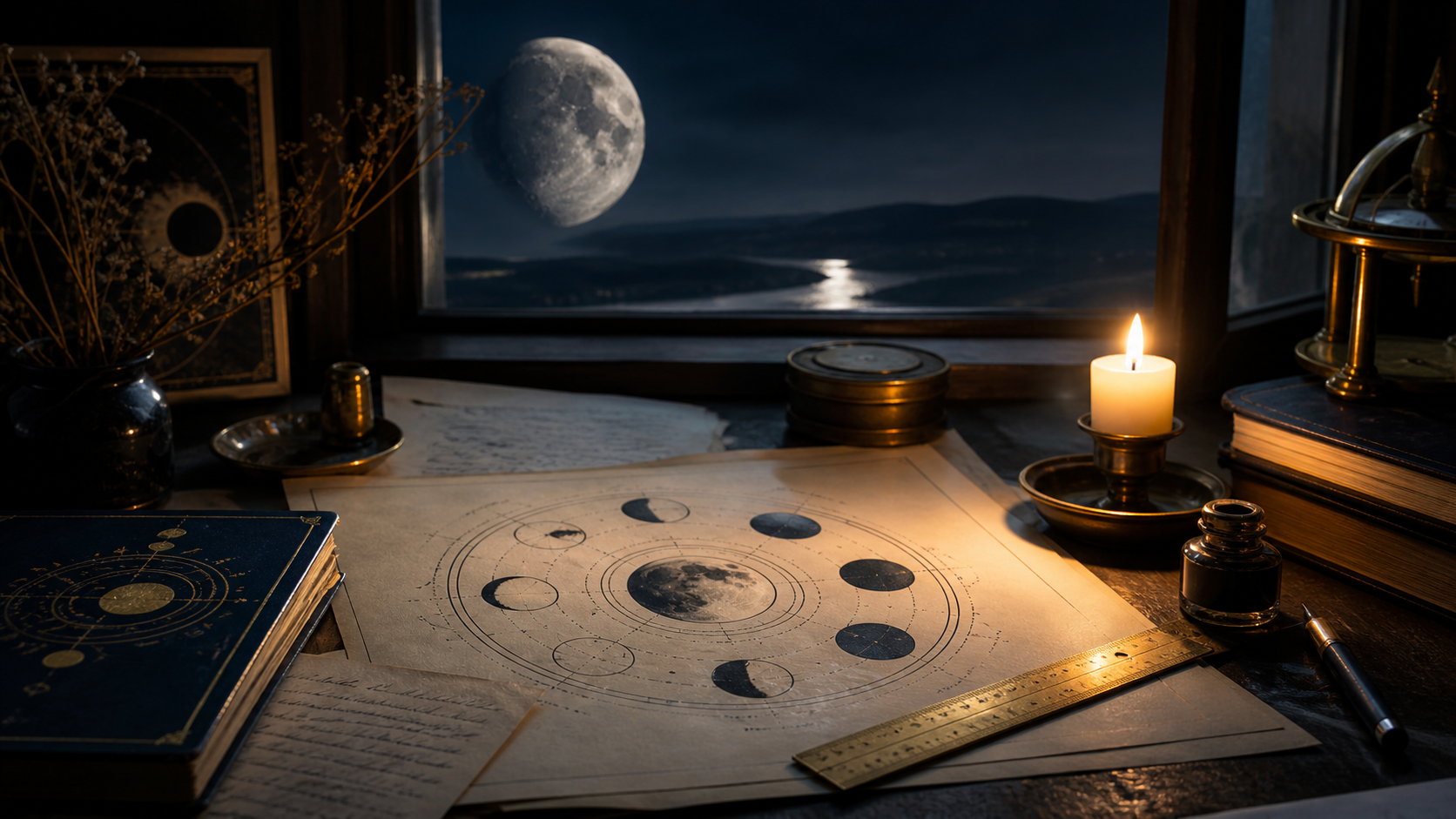
The Moon is waning gibbous when more than half of its visible disk appears illuminated and the illuminated fraction is decreasing. This intermediate phase follows the Full Moon and continues until the Last Quarter. It is not one exact instant in the way the four primary phases are.
The complete phase cycle averages about 29.5 days. The waning gibbous interval usually lasts roughly a week, though the visible fraction changes continuously. Local rise and set times depend on date and location.
Why the Moon still looks nearly full
Soon after the Full Moon, the illuminated fraction remains high. A casual observer may still call it full even though the exact Sun–Moon geometry has passed opposition. The missing light becomes more obvious as the Moon approaches Last Quarter.
A moon-phase calculator can show the fraction and the closest primary phase for a specific location and date. This is more precise than judging a photo without its capture time.
Astronomical phase and astrological meaning are different layers
The decreasing illuminated fraction is an astronomical observation. Ideas such as review, integration, sharing, or adjustment belong to astrological tradition. They can be used as journaling prompts, but they are not demonstrated effects of the Moon on decisions, mood, or the body.
A responsible article keeps that boundary visible. Feeling tired or emotionally alert after a Full Moon does not establish a lunar cause.
A simple reflective use
If lunar phases help structure a routine, use the waning gibbous period for a short review. Write what was already happening near the Full Moon, what information changed, and which first interpretation no longer fits. Keep the exercise tied to events you can name.
The point is not to force a release or search for a hidden message. It is to create a recurring moment for review, much like a weekly note or project retrospective.
- What was observable before the Full Moon?
- What new information is available now?
- Which conclusion needs more evidence?
The zodiac sign adds optional symbolism
Astrologers may also note the Moon's current zodiac sign. That sign changes every two to three days, so it does not remain the same throughout the waning gibbous phase. Avoid describing the entire week with the sign occupied immediately after the Full Moon.
If you use sign symbolism, state the date and time of the position being discussed. Treat the sign as an editorial prompt rather than a forecast.
A natal comparison needs degrees
To compare the phase with a birth chart, use the Moon's exact degree at a specific time rather than the phase label alone. Check close aspects to natal planets and use houses only when birth time and place are reliable.
A phase cannot be “personal” in a measurable sense. Degree contacts simply make the astrological comparison more specific.
What not to infer
The waning gibbous phase does not tell someone to end a relationship, postpone care, change medication, or make a financial decision. It cannot diagnose emotional processing or prove that a Full Moon revealed the truth.
Use direct information and qualified advice for consequential decisions. Keep lunar reflection optional and proportionate.
See how this pattern shows up in your actual birth chart.
Open your chart and look at your planets, houses, angles, and aspects in one place instead of reading the pattern in the abstract.
Frequently asked questions
What is a waning gibbous Moon?
It is the interval after Full Moon and before Last Quarter when more than half of the visible lunar disk is illuminated and that fraction is decreasing.
How long does the phase last?
It usually occupies roughly the week between Full Moon and Last Quarter, but illumination changes continuously rather than switching at a single waning-gibbous instant.
Does a waning gibbous Moon affect emotions?
The astronomical phase does not establish a psychological effect. Emotional interpretations belong to astrological tradition and should be treated as reflective prompts.
Sources and methodology
Astronomical definitions and cycle length are based on the U.S. Naval Observatory explanation of lunar phases. Astrological suggestions are clearly separated as optional editorial prompts and are not presented as causal effects on mood, health, or events. Source checked August 1, 2026.
- Phases of the Moon and Percent of the Moon IlluminatedU.S. Naval Observatory