
Moon4 min read
Aries New Moon — April 17, 2026: Exact Time And A Chart Reading Method
The verified phase time, tropical degree, local-date caveat, and a step-by-step way to place this New Moon in a birth chart.
Practical guides for the questions that bring you to a calculator—what a placement means, what a timing technique shows, and how to read a relationship pattern clearly.
All guides
64 guides found
The verified phase time, tropical degree, local-date caveat, and a step-by-step way to place this New Moon in a birth chart.

Separate the astronomical retrograde cycle from symbolic interpretation, then place it by house and close natal contacts.
Combine the activated annual house and time lord with current transits so one dramatic sky event does not outrank the year’s structure.
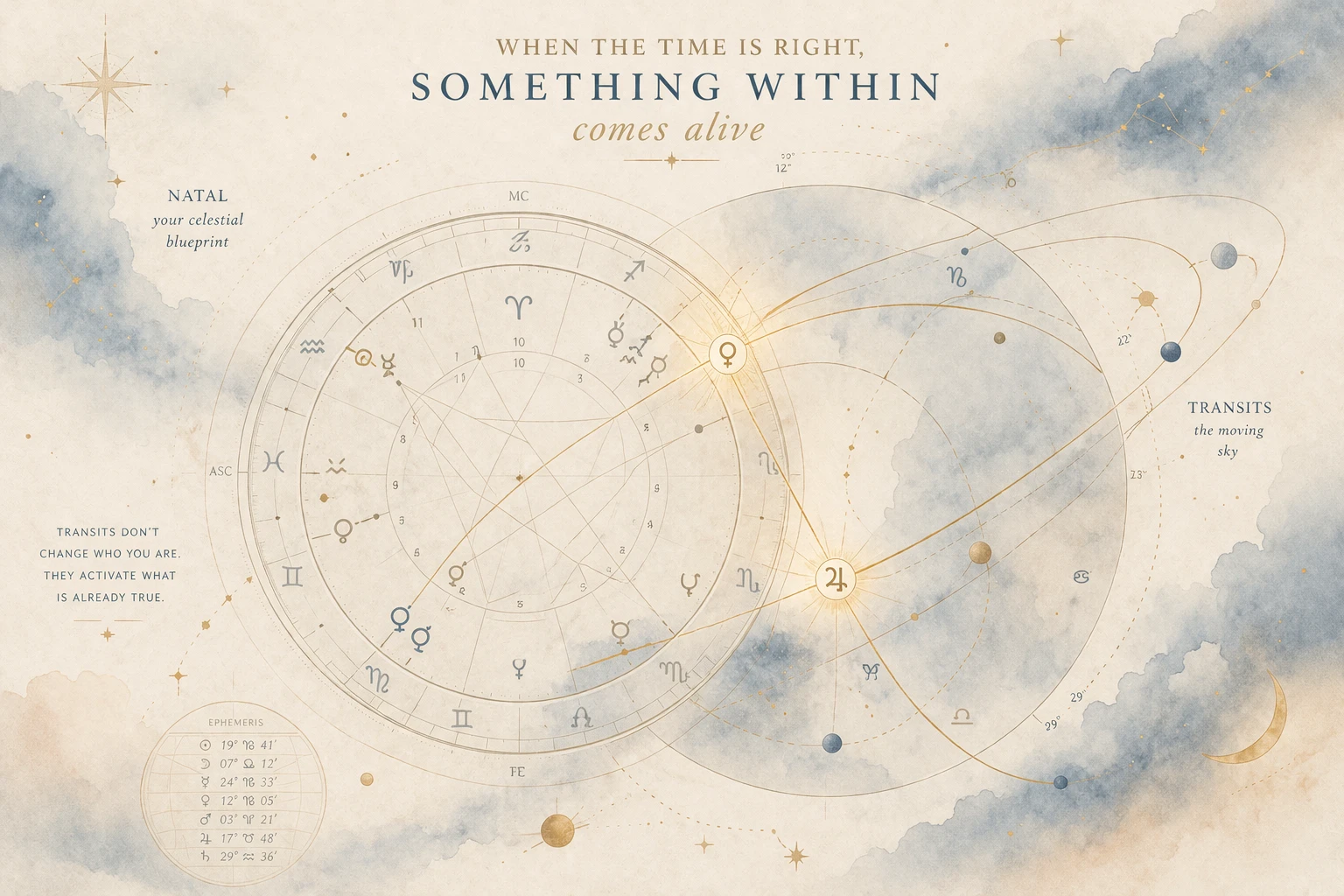
Use natal structure, timing repetition, and exact contacts to judge whether a transit activates an existing theme or adds temporary emphasis.
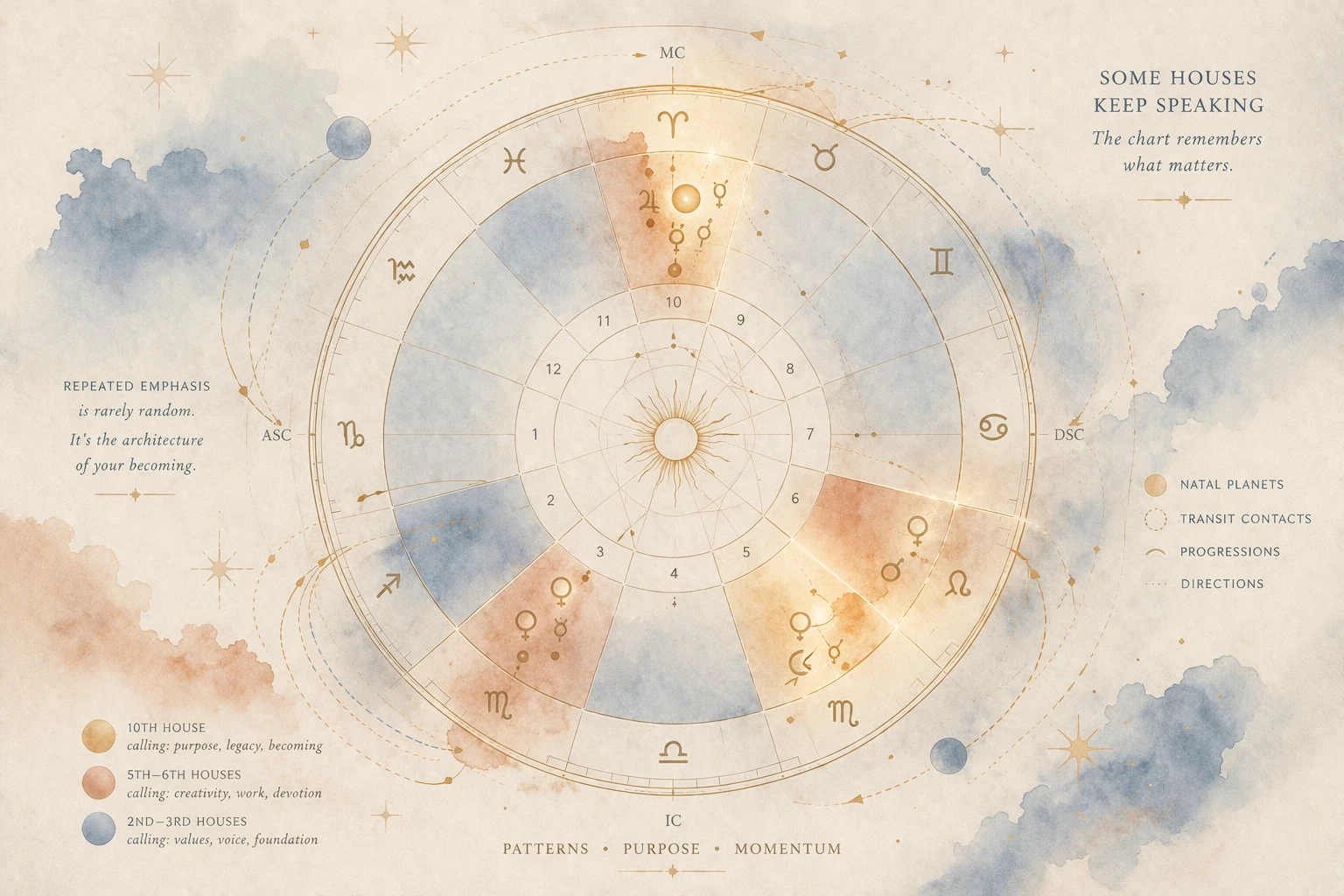
Trace house clusters, rulers, angles, and timing repetition to see when one life area genuinely organizes a chart.
Rank transits by planet speed, orb, natal importance, repetition, and timing context instead of reacting to every contact.
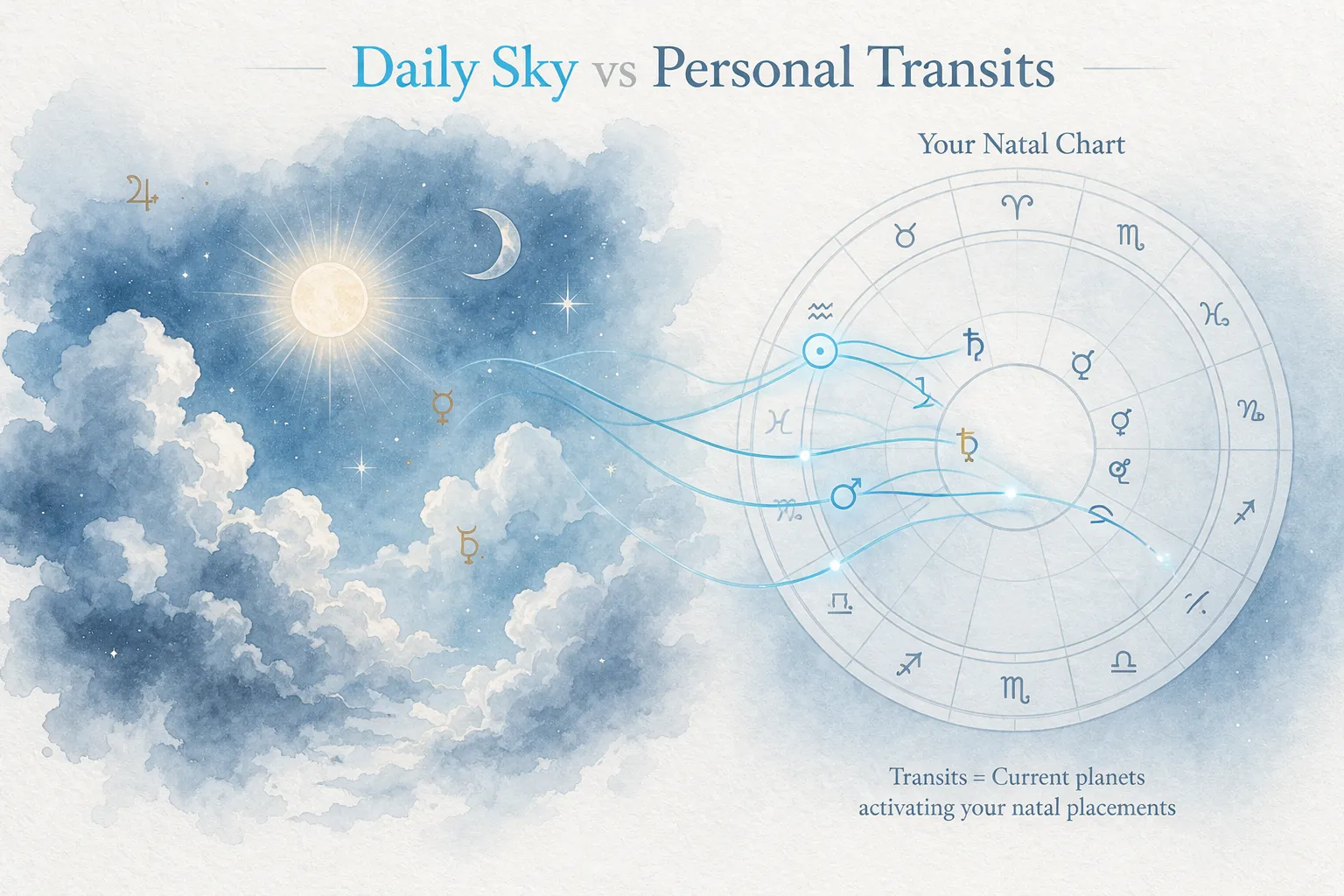
When the general sky is useful, when a natal comparison adds precision, and why the same transit does not land identically for everyone.

Use the Ascendant, chart ruler, first house, and Midheaven to reflect on visible style—without claiming a chart reveals what others think.
Read Moon square Saturn through direction, orb, natal context, and lived behavior without assuming heaviness means commitment.

A practical comparison of Moon–Venus aspects, including direction, aspect type, daily care, and the limits of easy chemistry.

How to read a Sun–North Node conjunction without turning significance into a promise about destiny or longevity.

A focused way to read attraction and changing relationship values without confusing one conjunction with compatibility.